3Commas vs Coinrule — Security and Automation Risk Comparison
This page compares 3Commas and Coinrule on security, API permissions, features, and known risk incidents. It does not constitute a recommendation to use either platform. ScammerWatch does not provide financial advice. No automated trading platform guarantees profit.
Security-Focused Comparison
This comparison is limited to API permission models, custody, security controls, documented incidents, operator transparency, and automation risks. It does not assign product scores or compare profitability.
| Security factor | 3Commas | Coinrule |
|---|---|---|
| API permission model |
Trade-enabled API Connects to supported exchanges through API credentials. Permissions should be restricted to the minimum required for automation, with withdrawals disabled when they are not required. |
Trade-enabled API Connects to supported exchanges through API credentials. Permissions should be restricted to the minimum required for automation, with withdrawals disabled when they are not required. |
| Custody |
Exchange-held funds The supplied material describes 3Commas as an automation layer connected to an exchange account rather than as the primary custodian of the user’s exchange balance. |
Exchange-held funds The supplied material describes Coinrule as an automation layer connected to an exchange account rather than as the primary custodian of the user’s exchange balance. |
| Security controls |
Encryption controls described The supplied material references encrypted API connectivity, SSL, firewall controls, and DDoS protection. |
Encryption controls described The supplied material states that API credentials are protected using AES-256 encryption and stored separately from the trading interface. |
| Documented incidents |
Incident documented The supplied material documents reports of unauthorized exchange-account trades associated with compromised API credentials and subsequent public responses from 3Commas. |
No comparable incident in reviewed material No equivalent security incident is documented in the material used for this page. This is not proof that security incidents cannot occur. |
| Operator transparency |
Verify current disclosures Users should independently check the current legal entity, terms of service, security documentation, support channels, and incident-response disclosures. |
Verify current disclosures Users should independently check the current legal entity, terms of service, security documentation, support channels, and incident-response disclosures. |
| Automation risk |
Trading actions possible Trade-enabled credentials may allow automated orders to affect assets held in the connected exchange account. |
Trading actions possible Trade-enabled credentials may allow automated orders to affect assets held in the connected exchange account. |
1. API Permission Model
Both services rely on API access to communicate with connected cryptocurrency exchanges. The risk profile depends heavily on which permissions are assigned to the API credential.
If withdrawal access is not technically required, withdrawal permissions should remain disabled. API credentials should be configured according to the principle of least privilege: only the permissions required for the intended automation function should be granted.
Important API limitation
Disabling withdrawal permissions reduces direct transfer risk, but it does not prevent a trade-enabled credential from placing orders on the connected exchange account.
3Commas API access
The supplied material describes 3Commas as communicating with exchanges through encrypted API credentials rather than by storing the user’s exchange login credentials. The API credential itself nevertheless remains security-sensitive.
Coinrule API access
Coinrule also relies on exchange API connectivity for automated execution. The same least-privilege principle applies: unnecessary permissions should remain disabled, and active API credentials should be reviewed periodically.
2. Custody and Access to Funds
The supplied material describes both services as automation layers that interact with connected exchange accounts through API credentials rather than as services that directly replace the exchange as the location of the user’s trading balance.
This distinction does not remove financial or operational risk. A compromised or incorrectly configured trade-enabled credential may still allow transactions that affect assets held in the connected exchange account.
Custody status
3Commas: Exchange-held funds Coinrule: Exchange-held funds
The relevant risk is therefore not limited to withdrawal access. Trading permissions, credential security, account security, and automation behavior must also be considered.
3. Security Controls
3Commas security controls
The source material states that 3Commas uses encrypted API connectivity and references infrastructure protections including SSL encryption, firewall controls, and DDoS mitigation.
These controls are relevant to infrastructure security but do not by themselves eliminate risks such as phishing, credential exposure, account takeover, incorrect permissions, or unauthorized automated trades.
Coinrule security controls
The supplied material states that Coinrule protects API credentials using AES-256 encryption and stores them separately from the primary trading interface.
Current documentation should still be reviewed independently because security architecture, exchange integrations, credential-storage practices, and authentication controls can change over time.
4. Documented Security Incidents
3Commas unauthorized trading reports
Documented incident
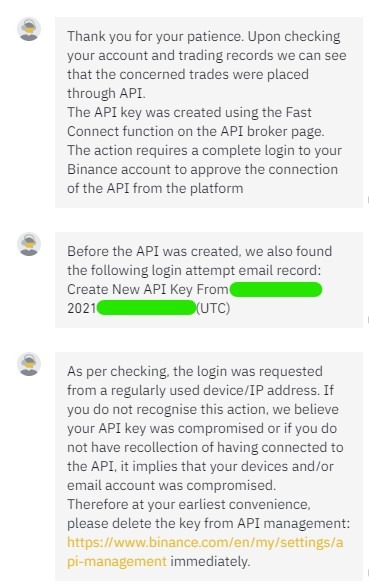
The material reviewed for this page describes reports of unauthorized exchange-account trades involving API credentials connected through 3Commas.
It also records that phishing was initially discussed as a possible cause before 3Commas later acknowledged a security problem and investigated affected API credentials.
This incident is relevant because withdrawal restrictions alone do not prevent a compromised trade-enabled credential from placing unauthorized orders.
Coinrule incident record in the reviewed material
No comparable incident found
The material supplied for this comparison does not document an equivalent Coinrule incident.
This should not be interpreted as proof that the service is immune to credential compromise, software defects, exchange failures, phishing, or other security incidents.
5. Operator Transparency
No numerical transparency score is assigned to either service. Instead, users should independently verify the information that determines whether an operator can be identified and held accountable.
- Current operating legal entity and jurisdiction
- Terms of service and privacy documentation
- Security and API documentation
- Incident disclosure and response procedures
- Support and security contact channels
- Documentation explaining how API credentials are stored and protected
6. Automation Risks
Automated trading introduces operational risks regardless of whether withdrawal permissions are enabled. A service with trade permissions may be capable of issuing orders on the connected exchange account.
Automation risk factors
Credential compromise Configuration errors Unauthorized orders API outages Software failures
- Compromised API credentials
- Phishing or account takeover
- Incorrect API permissions
- Unintended automation configuration
- Unexpected or duplicated order execution
- Exchange or API outages
- Software defects or integration failures
- Unauthorized trading following credential exposure
Disabling withdrawal permissions is an important security control, but it does not make automated trading free of risk.
What to Check Before Connecting Either Platform
- Confirm that withdrawal permissions are disabled unless they are technically required.
- Grant only the API permissions necessary for the intended automation function.
- Enable IP restrictions or whitelisting where supported by the exchange.
- Use a unique password and multi-factor authentication.
- Review active API credentials regularly.
- Revoke credentials that are no longer required.
- Review current security documentation and incident disclosures.
- Understand that automated execution can still create losses or unauthorized trades without withdrawal access.
ScammerWatch does not endorse either platform. If you have evidence of unauthorized trades, credential misuse, or another security incident involving either service, Report Suspicious Activity.
FAQ
No. Disabling withdrawals reduces direct transfer risk, but a trade-enabled API credential may still allow orders to be placed on the connected exchange account. Credential compromise, configuration errors, software failures, and unauthorized trading remain possible.
Yes. The material used for this page describes reports of unauthorized exchange-account trades involving API credentials connected through 3Commas and subsequent investigation of the incident.
No comparable incident is documented in the material supplied for this page. This does not prove that the platform is free from security or automation risk.
No. This page is limited to API permissions, custody, security controls, documented incidents, operator transparency, and automation risks. It does not rank or endorse either service.
Author