Overview
One of the major conundrums that newcomers in the world of token development are faced with consists of choosing the appropriate blockchain network for your particular needs. There are 3 popular options for creating tokens to choose from Ethereum, Binance Smart Chain, and TRON Blockchain.
Each of these blockchains comes with its own token standard, which is essentially a standardized set of rules governing the use of tokens on that blockchain.
While the subject of today’s article is specifically what is TRC20 standard of the TRON network, we will also compare all other relevant standards (along with their corresponding blockchain networks), so that you know what to expect when investing your hard-earned crypto in one of these platforms. Choosing the optimal token issuance standard is essential, so let’s get right down to business.
The Rise of TRON Network
What is TRC20 exactly? In order to answer this question, we should first briefly return to 2014. Eight years ago, the Ethereum network reigned supreme as the undisputed platform for developing USDT tokens. Ethereum smart contracts are used to create ERC20 tokens.
However, many users were dissatisfied with the high cost of transaction fees and the amount of time it took for blocks to be verified. One such user was Justin Sun, a then promising business executive (now the CEO of BitTorrent), who had decided to create his own blockchain network, one that would eliminate Ethereum’s shortcomings since the transaction fee on Ethereum gets only higher. Thus, the TRON blockchain was born.
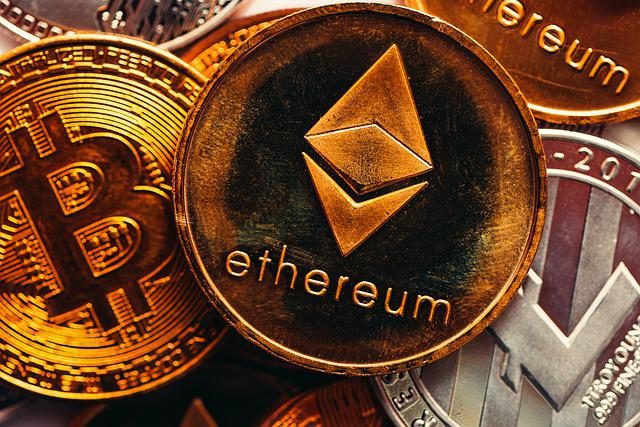
In 2018, Sun exchanged the ERC 20 token standard (a leftover from TRON’s early days, when the platform’s architecture was still extremely similar to Ethereum’s) for the newly-created TRC-20 token standard. The effects were tremendous and immediately visible: those users who migrated from the Ethereum blockchain to Sun’s platform experienced five times shorter verification speeds, the transfer fee had been reduced, while also having to pay much lower gas fees (almost two times lower, in fact). Of course, they never looked back in Ethereum’s direction; it was obvious which standard appeared superior in the TRC-20 vs ERC-20 comparison.
TRC-20 Basics
After an informative and entertaining lesson in history, let’s ask again: what is TRC20? Basically, it is a required standard that anyone interested in using (transferring, swapping, sharing) tokens on the TRON network must oblige with. TRON is a public blockchain, meaning that anyone can produce and issue their own TRON tokens, of course, as long as they comply with the standard rules.
Have in mind that there are six necessary items that must be implemented in order to comply with the TRC-20 token standard, along with three optional items. We will only list the items; if you’re interested in the underlying code, you can find it included in the TRON network developers’ guide for using the TRC-20.
The six required items include: totalSupply(), balanceOf(), transfer(), approve(), transferFrom(), allowance(); while the optional items are: Token Name, Token Abbreviation, Token Precision.
TRC20 vs. ERC20
Even though these two standards are compatible, before creating a crypto token for your business, you should learn the differences between these token standards. Some of the most distinct technical differences when it comes to ERC20 vs. TRC20 crypto tokens are listed below:
Blockchain networks: These tokens are created on different blockchains. The Ethereum network is used for ERC USDT (issued by Tether) and TRON is used for TRC USDT (issued on the TRON network).
Transfer speed: ERC tokens take up to 5 to 10 minutes, and TRC tokens transfer in a few seconds to a few minutes.
Fees: The average fee is around 30 USDT for ERC tokens and starts at 2 USDT for TRC tokens.
Security: Security measures are significantly higher in ERC tokens than in TRC crypto tokens.
Transactions per second: ERC tokens can process 20 transactions per second. However, TRC-based tokens are capable of processing around 2000 transactions per second.
Wrong Network Risk — Permanent Fund Loss
The most common cause of permanent fund loss when transferring TRC-20 tokens is sending to the wrong network. TRC-20 USDT and ERC-20 USDT are the same token name but they exist on entirely different blockchains. Sending TRC-20 USDT to an ERC-20 deposit address — or vice versa — results in the funds being sent to an address that is technically valid on the other network but controlled by nobody in most cases.
- Always verify the network before confirming a transfer: the receiving exchange or wallet must explicitly support the network version you are sending — not just the token name
- Check the deposit address network label: most exchanges label deposit addresses by network — TRC-20, ERC-20, BEP-20. If no network label is shown, contact support before sending
- Test with a small amount first: before sending a large amount on any network for the first time, send a small test amount and confirm it arrives correctly
- TRON addresses start with T: TRC-20 wallet addresses always begin with the letter T. An address that does not begin with T is not a TRON network address — do not send TRC-20 tokens to it
- Recovery of wrong-network sends is rare: exchanges occasionally recover wrong-network deposits but it requires manual intervention, is not guaranteed, and typically incurs a significant fee. Most wrong-network transfers to non-exchange addresses are unrecoverable
Fake USDT on TRC-20 — Token Impersonation Risk
TRC-20 USDT issued by Tether is the legitimate stablecoin. However, anyone can deploy a TRC-20 token with the name “USDT” and the same ticker symbol on the TRON network. These fake USDT tokens are worthless — they have no Tether backing and cannot be redeemed.
Fake USDT tokens are used in two documented fraud patterns:
- Fake trading platform balances: many fraudulent trading platforms reviewed by ScammerWatch credit users with a fake TRC-20 token that displays as “USDT” in the platform interface but is a worthless custom token. The user sees a USDT balance and attempts to withdraw it — but the withdrawal either fails or the “USDT” received is worthless on any legitimate exchange.
- P2P and OTC payment fraud: in peer-to-peer trading, a seller may send a fake USDT token to a buyer’s wallet. The buyer’s wallet shows a USDT balance because it reads the token name — not the contract address. Always verify the contract address of any USDT you receive against the official Tether TRC-20 contract address: TR7NHqjeKQxGTCi8q8ZY4pL8otSzgjLj6t
How to Verify You Have Received Legitimate TRC-20 USDT
- Check the contract address on TRONSCAN (tronscan.org) — search for the transaction and confirm the token contract address matches TR7NHqjeKQxGTCi8q8ZY4pL8otSzgjLj6t
- Do not rely on the token name or symbol alone — any token can be named USDT
- If you received USDT from an unverified source — a trading platform, P2P trade, or unsolicited transfer — verify the contract address before treating the balance as real
Address Poisoning on TRON — TRC-20 Specific Risk
Address poisoning attacks are particularly effective on TRC-20 because TRON addresses are long and look similar to each other. The attack works by sending a zero-value or dust transaction from an address that closely resembles a legitimate address you have previously used — differing only in the middle characters, which most wallet interfaces hide by default.
When you next copy an address from your transaction history, you may copy the poisoned address instead of the legitimate one. The transfer is sent to the attacker.
- Never copy addresses from transaction history: always copy the recipient address from the original verified source — the exchange deposit page, the contact’s verified communication, or your address book
- Verify the first and last 6 characters at minimum: most poisoning attacks match the first and last few characters of the target address. Verify the middle characters as well before confirming
- Use address book features: most wallets and exchanges allow you to save verified addresses. Use saved addresses rather than copying from transaction history
- Enable full address display: configure your wallet to show the full address rather than a shortened version when reviewing transactions
If you believe you have been a victim of address poisoning, fake USDT, or a wrong-network transfer connected to a fraudulent platform, submit a report at scammerwatch.com/report-a-scam . Include the transaction hash, the addresses involved, and the network on which the transaction occurred.
TRC-20 vs. BEP-20
As we said in our previous ERC20 vs TRC20 match, the TRC-20 standard is undoubtedly superior in terms of speed and cost, but what about Binance’s BEP-20 (which is a standard for Binance’s Smart Chain platform)? Well, this is a comparison in which the superior standard is harder to determine, as the situation is complicated. First, though, it will be illuminating to take a look at some of the important similarities between the TRC-20 and BEP-20 standards.
The Three Competitors
Binance was founded shortly after TRON blockchain, arising from a very similar dissatisfaction with the low quality of Ethereum’s services. It is interesting that, due to both TRC-20 and BEP-20 having evolved out of the outdated ERC-20 standard (in fact, all three standards are based on the same programming language, named Solidity), Binance and TRON tokens and smart contracts are mostly compatible with Ethereum blockchain – tokens created on one network can be used on all three of them. However, the key difference, which sets apart the competitors, lies in the underlying consensus mechanism.
To put it simply, the network’s consensus mechanism ensures the legitimacy of transactions by synchronizing all network nodes. It is precisely the optimization of the network’s consensus mechanism(s) that allowed TRON and Binance to overcome the Ethereum blockchain. Namely, while ERC-20 uses the PoW (Proof of Work) consensus algorithm, TRC-20 and BEP-20 users enjoy the customized, improved, and updated mechanisms, initially based on the old PoW, but much superior. TRON’s DPoS (Delegated Proof of Stake) and Binance’s PoSA (Proof of Staked Authority) are far more efficient ways (and with lower fees) of ensuring the legitimacy of transactions.
Why is this so? We’ll spare you the less interesting technical details. Instead, we’ll discuss other advantages these blockchains have over the Ethereum network.
Power Consumption

Namely, with DPoS and PoSA, there’s practically no mining involved (and with DPoS, there’s no mining involved at all)! DPoS can achieve this because the new blocks on the blockchain are validated according to the number of coins that are staked. Of course, no mining means less power consumption, which, in turn, leads to substantially less ecological damage. Therefore, avoiding ERC-20 will not only be good for you and your wallet, but you’ll also have the gratitude of Mother Earth, which is clearly a win-win situation.
Who Won?
Let us now return to the original question of this section of the article – which standard is superior, TRC-20 or BEP-20? Basically, it depends on how you look at things. The generally more secure standard is TRC-20. Binance, however, has a pretty low level of security so that’s one of its biggest drawbacks. Both standards offer the same results in terms of block verification speed (3 seconds per block). On the other hand, the transaction fees you’ll need to pay when using BEP-20 will likely be lower, somewhere between 0.4$ and 15$, while with TRC-20 tokens, you can expect to spend more than 15$ for each transaction. Can better security compensate for the higher fees? We’ll let you answer this one.
Wallets & Exchanges
If you have definitely decided that TRC-20 tokens are the right choice for all of your advanced token production needs, it is now time to procure a TRC20 wallet and/or find a suitable crypto exchange. Of course, we recommend storing your cryptocurrency in a secure wallet whenever you aren’t actively trading or converting the USDT tokens because even the safest exchanges can be hacked. Also, keep in mind that not all wallets that come with support for TRON transactions will also support the TRC20 USDT tokens, so be sure to check whether that is the case before buying your first USDT.
We’ll conclude this section of the article with two lists. The first one is a list of our recommended TRC20 wallets (which definitely support the TRC20 USDT tokens), and the other one is a selection of the best exchanges dealing in TRC20. Among them, you should be able to find and simply choose a TRC20 wallet and a TRC20 exchange that’ll suit you.
TRC-20 Exchange Notes
KuCoin. A reliable, user-friendly exchange that has never failed us. Both Binance and KuCoin are useful for experienced traders looking for the lowest fees possible. It is secure and easy to use for buying and selling cryptocurrencies and assets such as the TRC20 USDT.
Binance. Yes, Binance is not only one of TRON’s competitors when it comes to token creation, but is also one of the safest and most popular exchanges out there. TRC-20 Binance trading is convenient and hassle-free.
FTX. This exchange has been on the rise lately, thanks to its great security, a wide range of services, and elegant design. It allows users to trade using USDT TRC20 and ERC20 tokens.
XREX. Apart from the usual qualities (safe, easy to use), XREX attracts users because of the generally low trading fees.
Before using any exchange for TRC-20 transfers, verify that the exchange is regulated and supports TRC-20 specifically for the token you are sending — not just the token name. Sending TRC-20 USDT to an exchange address that only supports ERC-20 USDT will result in permanent loss of funds.
TRC-20 Wallet Options — Safety Notes
TRC20 wallet is a wallet whose address supports the TRC20 protocol and has the ability to receive TRC20 tokens.
Tron Wallet — browser extension wallet; only download from the official Chrome Web Store; verify the publisher before installing. This TRC20 wallet is completely dedicated to TRON’s cryptocurrency, with support for managing tokens created on TRON’s network, TRX (TRON’s native cryptocurrency), and in-wallet use of Tron DApps. No other blockchains are supported.
Omni Wallet — mobile wallet; download only from official app stores; verify the publisher. Even though this is an online wallet (which means its security is not as advanced as hardware wallets’), Omni Wallet does have the appeal of a long-existing, buoyant market. And, it lets you have full control over private keys.
Ledger Nano X Wallet — hardware wallet; purchase only from ledger.com directly; never from third-party resellers. Is there a tether wallet with a cooler name on the market? No, there isn’t, but the Nano X wallet is also highly-secure and offers pretty much every feature you might need when dealing with TRC-20 tokens.
Parting Words
And, that is pretty much all you need to know about the TRC-20 standard… for now. In this article we’ve covered the basics, however, if you’re interested in learning and becoming more proficient in the art of token development, be sure to follow our website from time to time, as we’ve got more articles planned that should be useful to crypto-enthusiasts and aspiring professionals alike. See you then.
Author